


Oakland, often seen as San Francisco’s cooler, warmer counterpart, is at a crossroads as it emerges from the pandemic and a fiscal crisis. Despite its vibrant food scene, rich cultural history, and notable events like Alysa Liu’s Olympic gold, Oakland’s journey to recovery is filled with both challenges and wins. The city has made significant strides in crime reduction and economic development, yet it faces ongoing struggles that reflect broader social and economic trends across the Bay Area. From the continued pressure of high office vacancies to the rise of local green job initiatives, Oakland’s transformation is a complex, multifaceted narrative.
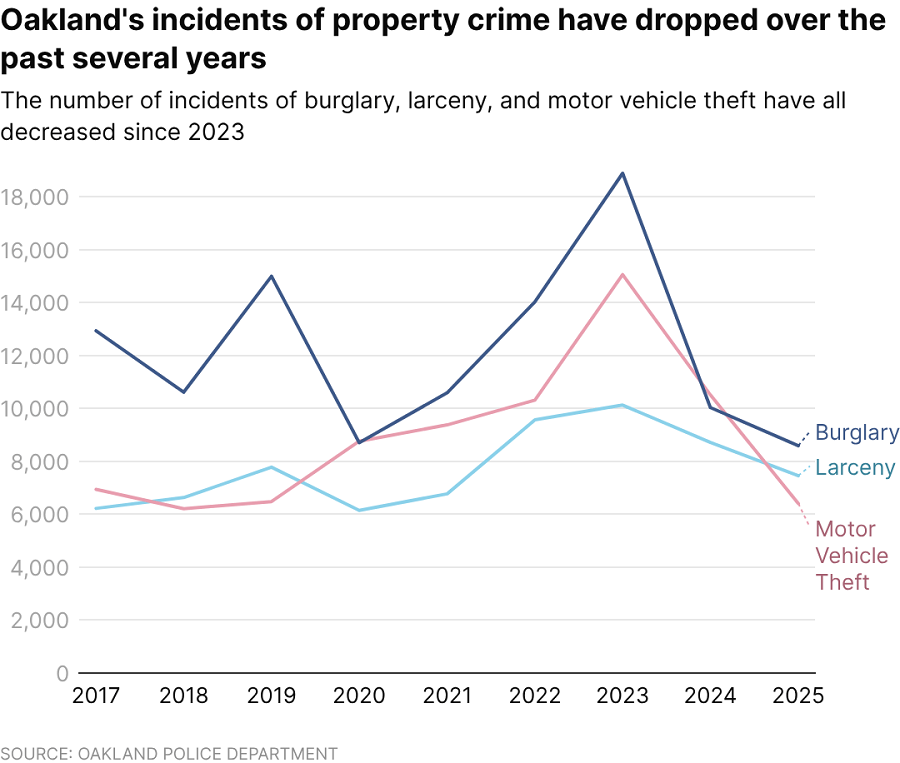
Crime has long been part of Oakland’s identity. In 2023, the city was deemed “in crisis” by the local NAACP, with high rates of violent crimes like carjackings and robberies tarnishing its reputation. However, a deeper look into the numbers reveals a positive trend: violent crime dropped by 25% in 2024, with significant decreases in car thefts, carjackings, and commercial burglaries. Law enforcement initiatives, such as a budget allocation for tackling illegal dumping and enhancing traffic safety, have played a crucial role in this decline. Despite these efforts, public perception lags, as the community’s lived experiences do not always align with the official crime data.
Oakland’s commercial real estate market mirrors its challenges. Vacancy rates remain high, especially in the downtown business district, with many office spaces still empty. However, the pace of new vacancies has slowed, and experts believe the market might have reached its lowest point. The potential for growth lies in the spillover from San Francisco’s high housing prices, with more companies and individuals looking to Oakland as a more affordable alternative. Retail vacancies also reflect this shift, with areas like Temescal and Rockridge showing promising signs of economic activity, driven by cafes, restaurants, and local businesses.
While San Francisco’s real estate market remains red-hot, Oakland offers a more affordable alternative. The median rent for a one-bedroom apartment in Oakland is significantly lower than in San Francisco, providing a more accessible option for renters. However, the city’s home prices have experienced a decline of 9.3% in the last year, which mirrors broader Bay Area trends. Despite the drop in home values, Oakland remains an attractive option for buyers and renters alike, offering more space at a lower cost compared to its neighboring city.
Beyond its economic struggles, Oakland is also making strides in climate action. The Oakland Climate Action Coalition, a collective of over 35 organizations, is pushing for a comprehensive energy and climate plan focused on sustainability, local green jobs, and community engagement. The coalition aims to create jobs in energy efficiency, home weatherization, urban agriculture, and recycling, targeting neighborhoods most affected by unemployment and poverty. This grassroots movement seeks to bridge the gap between environmental justice and economic equity, ensuring that vulnerable communities benefit from the transition to a green economy.
While tourism in Oakland saw a slight decline in 2024, the city’s vibrant culture, diverse neighborhoods, and growing reputation as a food capital continue to make it a desirable destination. Events like the NBA All-Star week and upcoming Super Bowl and World Cup events are expected to boost tourism numbers. Despite challenges at the Oakland airport, where passenger numbers declined, Oakland’s tourism sector is positioning itself for future growth, leveraging its unique cultural offerings and the increasing interest in sustainable travel options.
As Oakland faces its fiscal challenges and strives for economic recovery, the city’s multifaceted approach from crime reduction to climate action—sets it on a path toward long-term resilience. With a focus on green jobs, affordable housing, and community-centered development, Oakland is working to reshape its future and offer a model for other cities to follow in balancing economic growth with sustainability.
This ongoing transformation, marked by both setbacks and successes, will be shaped by local efforts and community-driven change. While the road ahead is complex, Oakland’s resilience and determination to improve its social and economic landscape remain central to its future.
